
Core Pasta Technique Everyone Should Know
and by everyone, I mean you

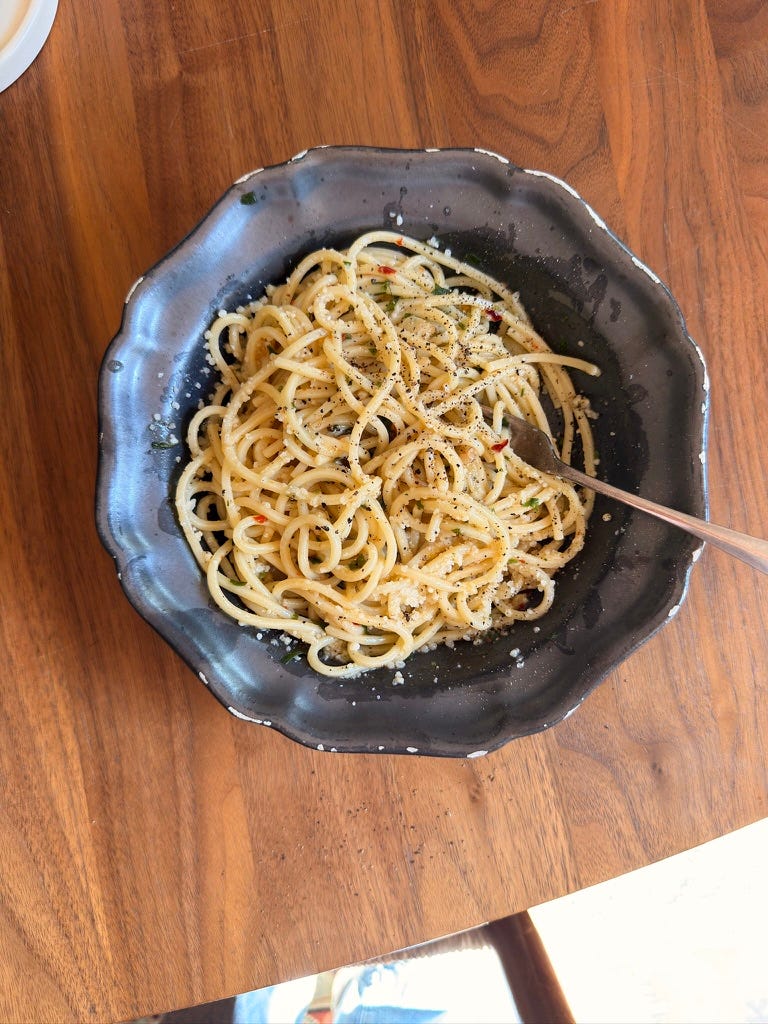
Hello to My Iggly-Wigglies!1
At the risk of blowing up my own spot, today I’m sharing one of the most essential pasta techniques. This preparation is a dish in and of itself, and can be built upon to make dozens of other pasta dishes.
I’m talking about Aglio e Olio—literally garlic and oil.
We all know that the smell of garlic sizzling in olive oil is one of the great smells. In an essay about my olive oil bottle2 in That Sounds So Good, I wrote “It’s almost as if I’m not cooking unless I’ve doused olive oil all over the place,” and I stand by that. What happens when I grab that bottle is often aglio e olio. When you cook the garlic properly, and the oil is good, and the pasta and water are tossed and mixed and mixed and tossed with patience and intention, it is one of the greatest dishes in the world.
I like this dish best with a twirler: spaghetti, thick spaghetti, or spaghetti alla chitarra, but do whatever. Since it’s my Just-Got-Home-From-a-Trip dish, I’ll use what I find in the pantry. Aglio e olio is brainless, it’s ubiquitous, it’s meditative, and it’s fast. When my dad was in the hospital, it was all I made for days.
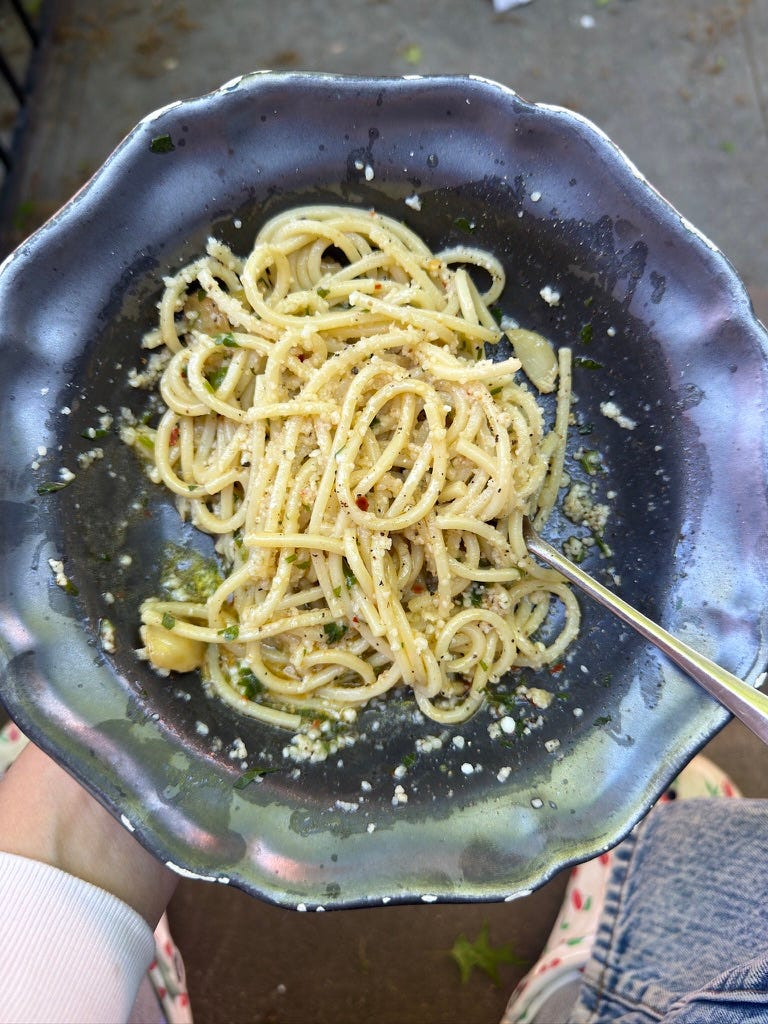
It’s also the most minimal of all the Working Girl Pastas; it’s on my Top Three Comfort Foods list; and it’s clutch for drungry late nights. In his hugely influential book, The Pasta Book, Fred Plotkin writes that “people seem to like to eat a great deal of this spaghetti while drinking lots of fresh young white wine.” (He suggests a Roman white or Orvieto.)
The majority of my income comes from paid subscriptions to this newsletter, and there’s no bereavement leave for us self-employed folks. If you’ve thought about signing up in the past, I’d be hugely grateful for your support now.
If you break it down to the very first step—toasting the garlic in oil—aglio e olio is the foundation of countless staple pasta dishes: marinara, passata, pasta with lemon, pasta with greens, orecchiette with broccoli and sausage, arrabiata, linguine with clams, pasta with melted cauliflower sauce, puttanesca, pasta with tuna, pasta with crispy mushrooms … I could go on.
My ingredient interventions are few (we’ll get into the Spin Its later this week): I like to add freshly chopped parsley to the garlic and oil while they’re cooking, but I don’t add any parsley at the end. I spike the base of the sauce off-heat, and generously, with crushed red pepper flakes (this prevents the chiles from burning). I dig it with anchovies. I like it with Parm, so I add Parm, and if an Italian purist yells at me for that, I will agree with them in theory, and still add Parm.
A step-by-step video and the recipe are below. Technique-wise, nothing is hard, but if you screw any of this up, the dish is ruined.
Keep reading with a 7-day free trial
Subscribe to Food Processing to keep reading this post and get 7 days of free access to the full post archives.